Beyond Fitzpatrick: Why the Monk Scale is the new standard for Spray Tan Artists.
If you work in spray tanning, how well you read and understand your clients skin is pretty much everything. The solution percentage and bronzer tone you choose and how long you suggest someone develop, all comes down to your assessment. For a long time, the whole spray tan industry relied on one tool for that: the Fitzpatrick Scale. But there's a different framework that's been quietly changing how people think about skin tone, and if you haven't looked into it yet, you should. It's called the Monk Skin Tone Scale, and it fills in some real gaps.
The Fitzpatrick Scale: Still Useful, but not the whole picture
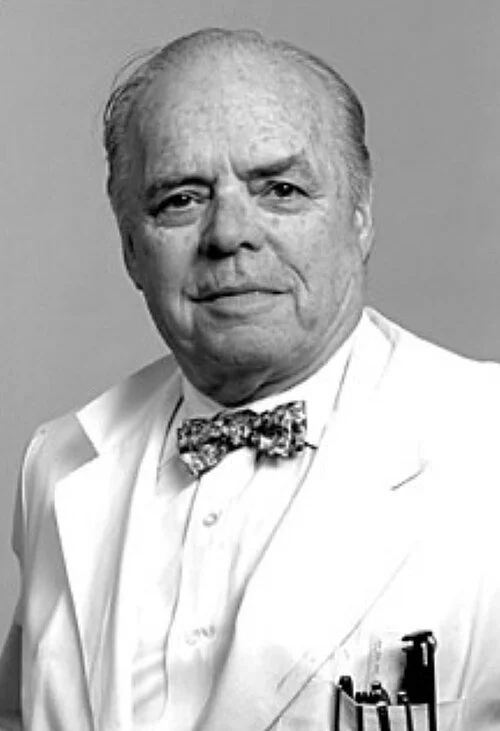
Dr. Thomas B. Fitzpatrick was a dermatologist and a professor of dermatology at Harvard Medical School and his original goal was pretty specific: to investigate the role of sunlight and especially sunburn in the development of melanoma. In 1975, he created a numerical scale that classified skin into six types based on two things: your natural skin color and how your skin responds to sun exposure.
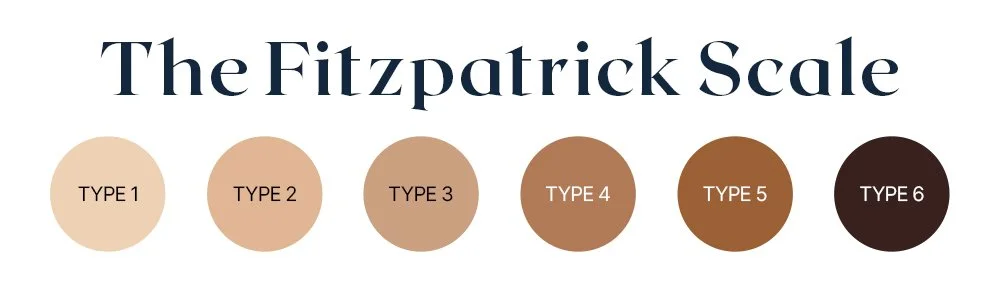
Type I burns every time and never tans. Type II usually burns, sometimes tans. Type III occasionally burns and tans gradually. Type IV rarely burns and tans easily. Type V almost never burns and tans very easily. Type VI never burns.
For spray tanning, this is somewhat useful. It helps you predict how DHA will behave on someone's skin and how deep the result might develop.
But here's the problem: Fitzpatrick was built almost entirely on white European patients. And the further you move toward deeper skin tones, the more inadequate it gets. Types IV, V, and VI are doing a lot of heavy lifting across a massive range of lighter brown and deeper complexions. For anyone serving a diverse clientele…that's a real issue.
The Monk Scale: more points, more precision

Dr. Ellis Monk is a sociologist at Harvard who studies racial inequality and colorism. He developed the Monk Skin Tone Scale in 2023 specifically because he kept noticing the same problem across beauty and tech: the tools being used to assess skin tone just weren't built with diverse populations in mind. They couldn't distinguish between shades that, to anyone paying attention, are clearly very different.
Dr. Monk built something better. He pulled data from a large, racially diverse group and designed a 10-point scale that expands meaningfully in exactly the places Fitzpatrick doesn't. The biggest improvement is in the mid-to-deep range, MST 5 through 8, which is where clients most often feel like spray tan assessments miss them. Google has even adopted the scale for building more inclusive AI systems, which tells you something about how seriously the research community is taking it.
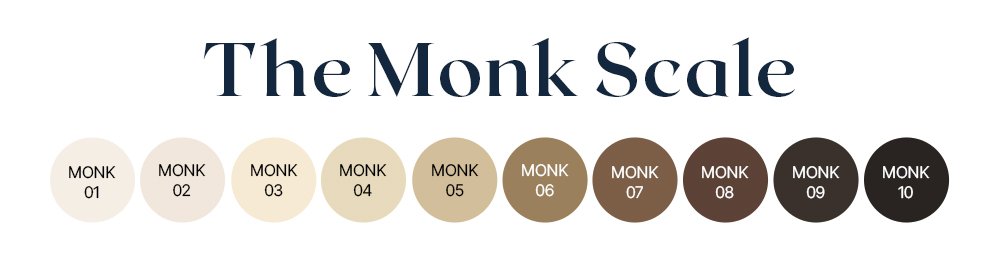
The Monk Scale gives no direct indication of how quickly your skin burns or tans.
More from Dr. Monk here: https://www.youtube.com/watch?v=crD1tzTlE4o
Why this matters for you as a spray tan artist.
Representation in skin tone classification has real, practical meaning. When your assessment tools don't accurately describe what you're looking at, you're guessing. And guessing leads to clients who walk away thinking spray tanning just doesn't work on their skin. That, my friends, is a fundamental problem.
The good news is you don't have to choose one scale over the other. They work well together.
Use the Fitzpatrick Scale to understand sun reactivity and skin behavior. It's still the right tool for predicting how DHA will develop and how fast. That hasn't changed.
Use the Monk Scale to actually identify skin tone with precision. With 10 points instead of 6, you can make meaningful distinctions, especially for clients who've always been squeezed into a category that kind of fits but not really. A client at MST 6 with warm golden undertones needs a different approach than a client at MST 7 with cooler tones…even if Fitzpatrick would call them both Type IV.
And then work in your undertone assessment separately. Neither scale captures that fully, and it matters. Warm, cool, neutral; assessing undertone directly takes two seconds and makes your solution selection way more accurate and makes sure your clients get the absolute best results.
Making it practical in your consultations
If you are not yet comfortable with visually identifying difference skin tones, keep a visual reference for both scales at your salon or with you in your mobile kit. Most clients don't know their Fitzpatrick type, but if you show them a chart, you can work it out together in under a minute. MST swatches work the same way and seeing the options side by side makes it easy.
Write it down. When you note both a Fitzpatrick type and an MST number alongside what solution you used and how it turned out, you're building not only a profile, but more importantly you’re building trust with your client. The shift toward using both scales signals that you take every client seriously, not just the ones the old tools were designed for. Better consultations/assessments lead to better results, and better results lead to the kind of word-of-mouth that actually builds trust and grows your business.